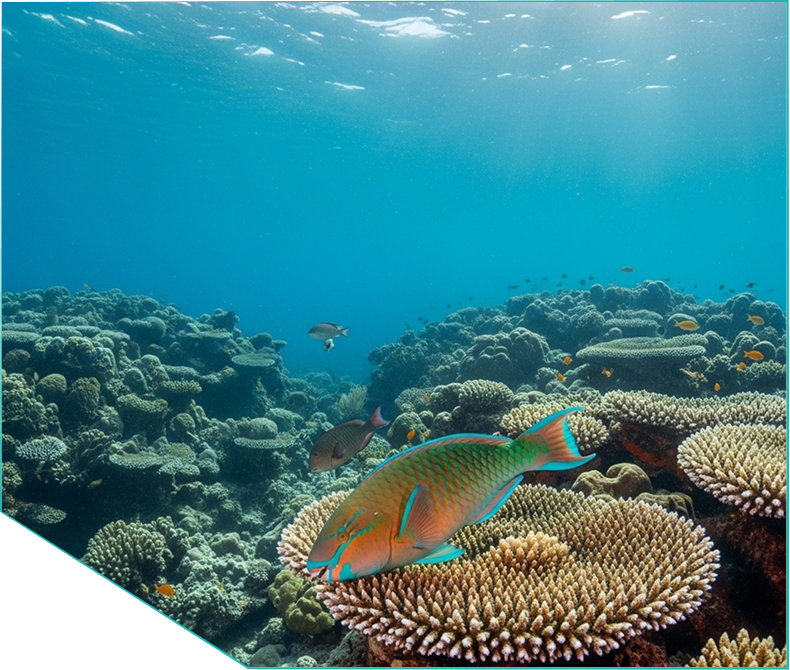
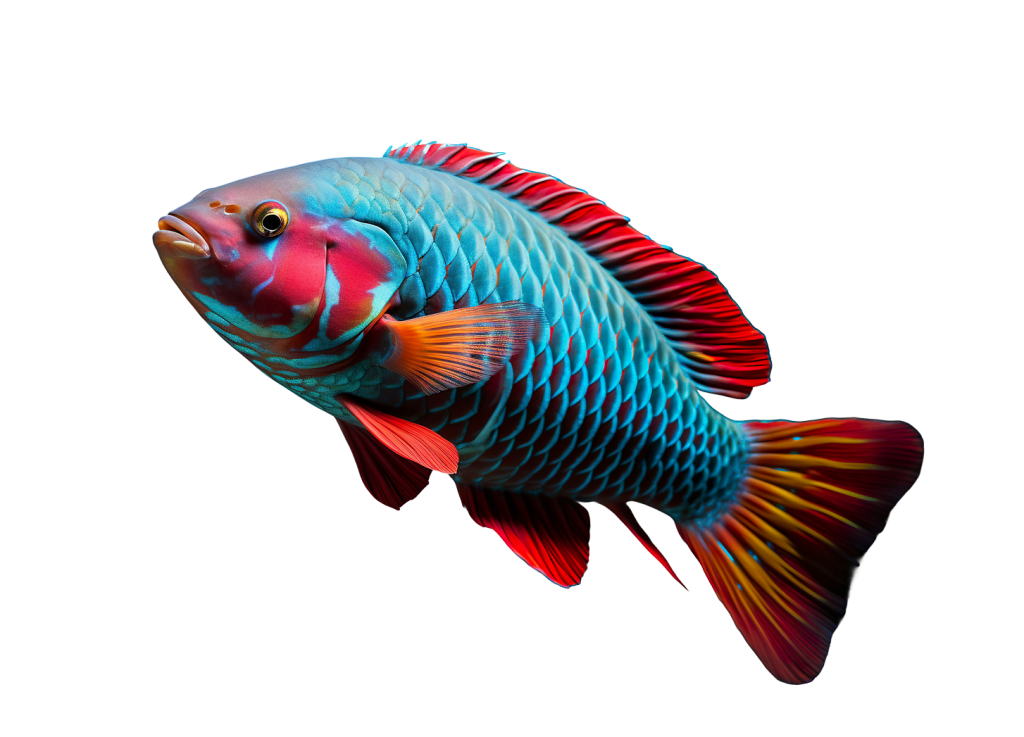
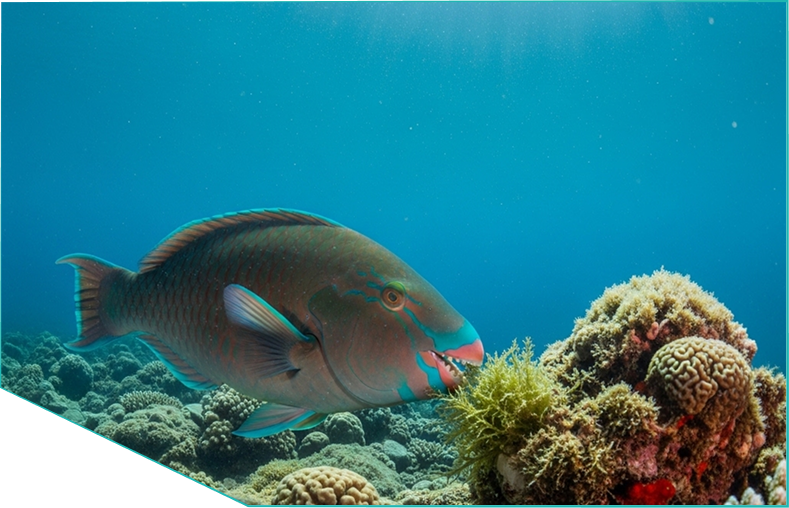
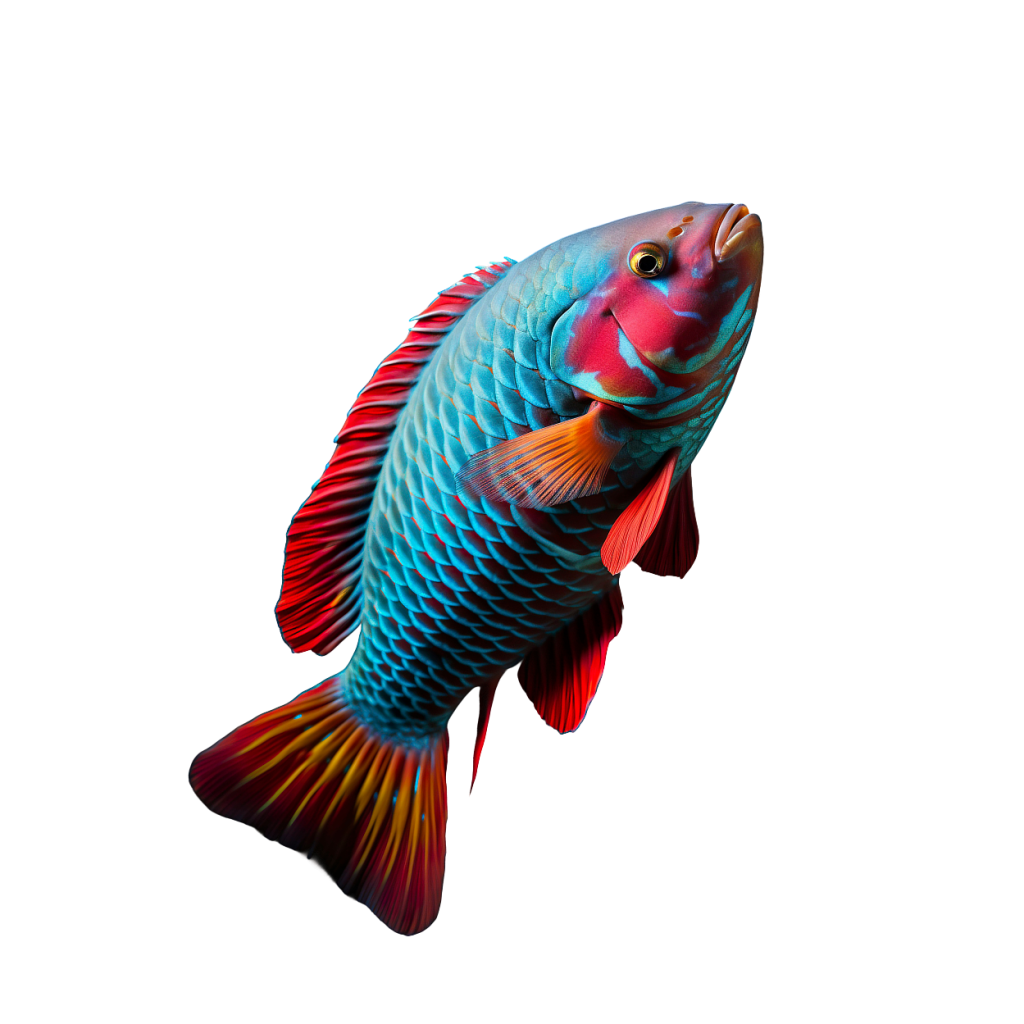
Parrotfish are among the most important species in Caribbean coral reefs. These vibrant fish are essential for keeping reefs alive, clean, and balanced. Without them, entire reef systems can collapse.
Why
PARROTFISH
Matter
Guardians of Coral Reef Ecosystems
Parrotfish are among the most important species in Caribbean coral reefs. These vibrant fish are essential for keeping reefs alive, clean, and balanced. Without them, entire reef systems can collapse.
Parrotfish are one of the most important species in Caribbean coral reef ecosystems. These colorful fish play a vital role in keeping reefs healthy and balanced. By constantly grazing on algae and maintaining reef surfaces, they allow corals to grow and thrive. Without parrotfish, coral reefs quickly become weak, overgrown with seaweed, and unable to survive. Their presence is a key indicator of a healthy marine environment.
Role in Coral Reef Ecosystems
Controls Algae
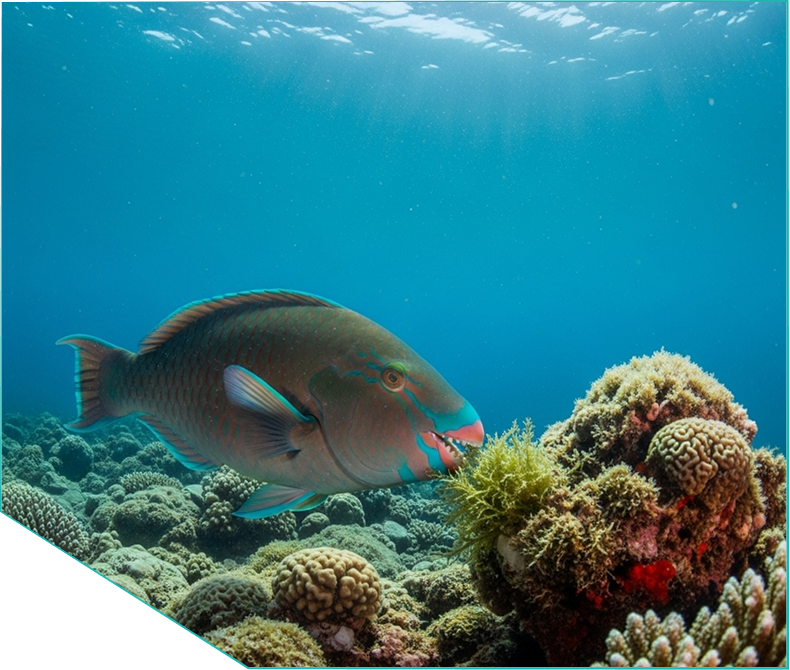
Parrotfish feed on algae and seaweed that grow on coral reefs. This prevents algae from spreading uncontrollably and damaging coral ecosystems.
Cleans Corals
While feeding, parrotfish scrape algae from coral surfaces, effectively cleaning them and allowing corals to grow without obstruction.
Maintains Balance
They help maintain a natural balance between coral and seaweed, ensuring that neither dominates the ecosystem.
Supports Reef Structure
By keeping reefs clean and functional, parrotfish indirectly support the structure and long-term stability of coral ecosystems.
Protection Mechanism
Controlling Algae Growth
Parrotfish use their strong, beak-like teeth to scrape algae off rocks and coral. This prevents algae from blocking sunlight and stopping coral from growing. Without this natural cleaning process, reefs would quickly become overrun and damaged.
Protection Mechanism
Creating White Sand
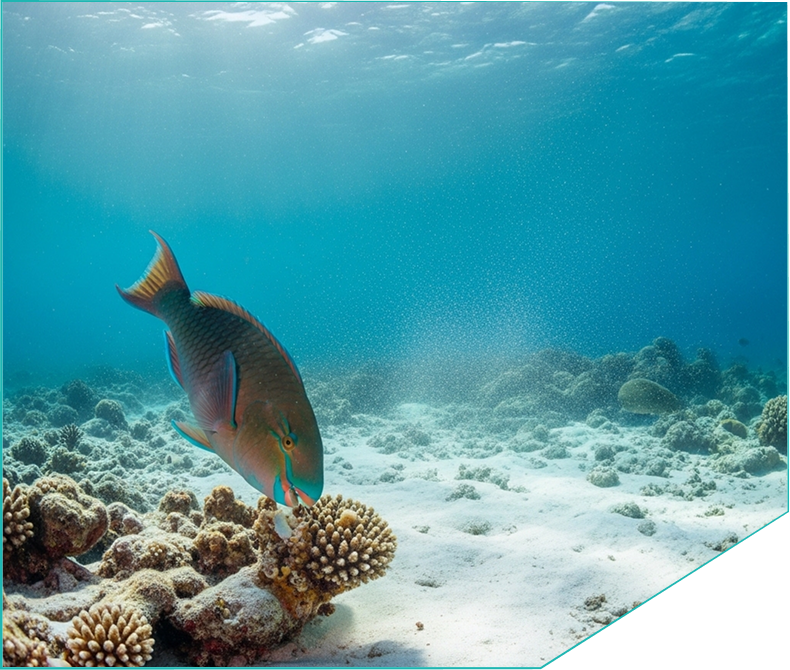
As parrotfish feed, they bite off tiny pieces of coral. These fragments are broken down during digestion and later released as fine sand. This process contributes significantly to the formation of the beautiful white beaches found across the Caribbean.
Impact of
Overfishing
Overfishing of parrotfish and other grazing species has caused serious damage to coral reefs around the world. Without these natural reef protectors, ecosystems begin to collapse.
Key Impacts:
• Seaweed grows uncontrollably without natural grazers • Corals become overgrown, smothered, and even poisoned • Reef health declines rapidly • Some reefs have lost more than 50% of their living coral
Example:
Many damaged ecosystems are now called “failure reefs,” including areas in Jamaica, Florida, and the U.S. Virgin Islands.
Why Protecting Parrotfish Matters
Protecting parrotfish is one of the most effective ways to restore and maintain healthy coral reefs. When these fish are allowed to thrive, entire ecosystems benefit.
Benefits of Protection:
Reefs remain healthier and more resilient
Coral regrowth and recovery improve
Tourism and fishing industries benefit economically
Marine ecosystems stay balanced and stable
Success Examples:
Marine protected areas such as Bermuda and the Flower Garden Banks clearly show that conservation efforts work when fishing pressure is controlled.
Final
THOUGHT
THOUGHT
Parrotfish are not just beautiful and colorful reef fish—they are essential guardians of coral reef survival. Their role in maintaining balance, cleaning reefs, and supporting ecosystems makes them irreplaceable.
Protecting parrotfish means protecting entire marine ecosystems, coastal economies, and the future of our oceans. If we want coral reefs to survive for generations to come, conserving these remarkable fish is a critical step.
Parrotfish are not just beautiful and colorful reef fish—they are essential guardians of coral reef survival. Their role in maintaining balance, cleaning reefs, and supporting ecosystems makes them irreplaceable.
Final
THOUGHT
THOUGHT
Protecting parrotfish means protecting entire marine ecosystems, coastal economies, and the future of our oceans. If we want coral reefs to survive for generations to come, conserving these remarkable fish is a critical step.